



Lead-Free by Design
RoHS, Drinking Water, REACH
Lead-free brass, gunmetal and stainless steel: future-proof materials for valves and hydraulic components
As of: 05.10.2026
For decades lead was a natural part of brass and gunmetal. It improves machinability, lowers tooling costs and gives clean threads. Lead-free brass with lead at max. 0.1 % is turning from a niche material into a requirement, because two sets of rules act on the same material at the same time, and both work with fixed dates: the RoHS Directive 2011/65/EU with exemption 6(c), and the EU Drinking Water Directive (EU) 2020/2184 with the European positive lists.
The legal framework in two sentences
RoHS limits lead to 0.1 % by weight per homogeneous material, transposed into national law in every Member State. The Drinking Water Directive allows permanent contact with drinking water only for materials held in a positive list, subject to the transitional arrangements to 2032.
RoHS: exemption 6(c) and its timeline
Without an exemption, leaded copper alloys would not be admissible in electrical and electronic equipment. Exemption 6(c) in Annex III allows up to 4 % lead in copper alloys. Delegated Directive (EU) 2025/2364 of 08.09.2025, published in the Official Journal on 21.11.2025, set its expiry date uniformly at 30.06.2027 for all equipment categories; the earlier separate date for category 11 has gone. A further renewal application was filed on time on 12.12.2025. Under Art. 5(5) of the Directive the exemption stays valid until the Commission decides, so the expiry date is suspended. That is not something to plan on: if the application is refused, the exemption expires under Art. 5(6) no earlier than 12 and no later than 18 months after the decision. Requalification, tooling, documentation and stock run-off all have to be completed within that window. Companies that have made the changeover reckon with at least two years. Anyone waiting for the decision will then have less time than the changeover needs.
New since 1 July 2026: the footnote to 6(c)
Since 01.07.2026 a footnote to exemption 6(c) applies; national transposition was due by 30.06.2026. It covers equipment supplied to the general public whose accessible parts can be put in the mouth by children. For that equipment 6(c) applies only with evidence of a lead release of no more than 0.05 micrograms per square centimetre and hour and, for coated parts, effectiveness for at least two years. For all other equipment 6(c) continues to apply unchanged. A statement of conformity under 6(c) should nevertheless give the proven lead content of the batch, otherwise a gap remains in the technical documentation.
Equipment or component: where RoHS applies
A common misjudgement concerns the scope. RoHS applies to equipment, not to individual pipework components. A purely hydraulic manifold without electrical function is not electrical equipment. Once an actuator, pump, controller or heat exchanger is added, the assembly is normally equipment, and RoHS then applies to every homogeneous material inside it, including the valves. What counts is the independent function, the classification under Art. 3 and the exclusions under Art. 2(4), among others for large-scale fixed installations. Heat pumps usually fall under category 1, transfer, domestic, fresh water, apartment and buffer charging stations usually under category 11. Responsibility for the declaration of conformity rests with the equipment manufacturer, not with the valve supplier. That is exactly why verbal assurances are not enough.
In short: what counts is not the material designation but the proven lead content per batch and the positive list entry of the material.
Terms on this page: lead-free means lead at max. 0.1 % and therefore RoHS conformity without exemption, low-lead means lead at max. 0.2 % and RoHS only via exemption 6(c), leaded means more than 0.2 % lead.
Drinking water: European positive lists from 31 December 2026
In parallel, the Drinking Water Directive applies. From 31.12.2026 the European positive lists under Implementing Decision (EU) 2024/367 replace the national assessment schemes, together with the conformity assessment under Delegated Regulation (EU) 2024/370 and the marking under Delegated Regulation (EU) 2024/371. From 01.01.2027 new products go through the EU route with EU certificate and EU marking.
The transitions matter in practice. Under Art. 3, nationally approved starting substances, compositions and constituents may continue to be used in manufacturing until 31.12.2032, provided 5 micrograms of lead per litre are met at the tap. Products holding a valid national conformity confirmation on 31.12.2026 may continue to be used within the transitional period, at the latest until 31.12.2032. Entries in the first European positive lists carry staggered expiry dates of their own: what determines how long a position can be built in is the expiry date of the entry, not the material name.
Lead at the tap: 10 or 5 micrograms per litre
The EU parametric value for lead at the tap is 10 µg/l and falls to 5.0 µg/l by 12.01.2036 at the latest; Member States may bring that date forward. Germany has done so with effect from 12.01.2028, and from then only listed materials may be newly installed there; free-cutting brass CW617N and CW614N drops out. Independently of the water value, the figure of 5 µg/l already governs the material side: it is the benchmark for the assessment of compositions and the condition attached to the Art. 3 transition. This affects not only new developments but every position that is still to be in the catalogue after 2028.
National approvals: what applies in your market
Until 31.12.2026 the national schemes remain the route to market. From 01.01.2027 new products go through the EU route with EU certificate and EU marking, while certificates valid on 31.12.2026 carry existing products through the transitional period.
- National route
- ACS applies until 31.12.2026.
- New products
- From 01.01.2027 through the EU route, with EU certificate and EU marking.
- Existing certificates
- ACS valid on 31.12.2026 remain usable in the transitional period, at the latest until 31.12.2032.
- National route
- Kiwa ATA certification applies until 31.12.2026.
- New products
- From 01.01.2027 through the EU route, with EU certificate and EU marking.
- Existing certificates
- ATA certificates valid on 31.12.2026 remain usable in the transitional period, at the latest until 31.12.2032.
- National route
- The hygienic certificate of NIZP PZH-PIB applies until 31.12.2026.
- New products
- No hygienic certificate for new products from 01.01.2027 ; they go through the EU route.
- Existing certificates
- Certificates valid on 31.12.2026 can be extended, but not beyond 31.12.2032.
- National route
- ÜA marking and ÖVGW certification apply until 31.12.2026.
- New products
- No new registration certificates after 31.12.2026 ; new products go through the EU route.
- Existing certificates
- Can be renewed, but not widened to further product types. Transition until 31.12.2032.
- National route
- The UBA metal assessment basis, 8th amendment of 09.07.2026, applies until 31.12.2026.
- New products
- From 01.01.2027 through the EU route, with EU certificate and EU marking.
- Existing certificates
- Certificates valid on 31.12.2026 remain usable until the end of 30.12.2032.
- In addition
- Lead limit at the tap 5.0 µg/l from 12.01.2028. Time-limited material entries, among them CW617N and standard CW511L-DW, end on 11.01.2028.
- National route
- SVGW certification under Swiss food law, outside the EU framework.
- EU market
- Products placed on the EU market must meet the EU drinking water rules, wherever they are built.
- RoHS
- Equipment sold into the EU must comply with EU RoHS as well, including the deadlines for exemption 6(c).
Summary of the national transitional arrangements as of October 2026. The applicable national implementing rules and the requirements of the respective certification body prevail.
Deadlines at a glance
RoHS and drinking water law run in parallel, not one after the other. Filled markers are the dates that change what you may supply or install.
-
21.11.2025RoHS Exemption 6(c) limited to 30.06.2027
Delegated Directive (EU) 2025/2364 of 08.09.2025 published in the Official Journal. One expiry date for all equipment categories, the separate date for category 11 has gone.
-
12.12.2025RoHS Renewal application filed
Under Art. 5(5) the exemption stays valid until the Commission decides. The decision is pending.
-
01.07.2026RoHS Footnote to 6(c) applies
For equipment supplied to the general public with parts accessible to children: lead release max. 0.05 µg per cm² and hour.
-
31.12.2026Drinking water European positive lists apply
Implementing Decision (EU) 2024/367, conformity assessment and marking under (EU) 2024/370 and 2024/371. National schemes stop being the route to market.
-
01.01.2027Drinking water New products through the EU route
EU certificate and EU marking. Several countries issue no national certificate for new products from this date.
-
30.06.2027RoHS Expiry date of exemption 6(c)
Suspended while the renewal is pending. If it is refused, the exemption expires under Art. 5(6) no earlier than 12 and no later than 18 months after the decision.
-
11.01.2028Germany Time-limited material entries end
Among them CW617N, CW614N, CC499K and standard CW511L-DW. From 12.01.2028 the lead limit at the tap is 5.0 µg/l, and only listed materials may be newly installed.
-
31.12.2032Drinking water Transitional routes close
The Art. 3 transition for nationally approved compositions and the national conformity confirmations end. From then on only the EU framework applies.
-
12.01.2036Drinking water 5.0 µg/l lead at the tap EU-wide
At the latest. Member States may bring the date forward, as Germany has done for 12.01.2028.
Last reviewed October 2026. The applicable versions of Directive 2011/65/EU, Directive (EU) 2020/2184, the associated legal acts and their national transposition prevail.
Materials compared
Classification in this overview: lead-free means lead at max. 0.1 %, low-lead max. 0.2 %, leaded more than 0.2 %. The proven lead content per batch is what counts.
| Material | Lead content (Pb) | Classification | RoHS | European positive list (Annex II 2024/367) | German UBA entry |
|---|---|---|---|---|---|
| CW617N-DW (CuZn40Pb2) hot stamping brass | 1.6 to 2.2 % | leaded | only via exemption 6(c), until 30.06.2027 | not listed | 2.10.3.1, groups B to D, until 11.01.2028 |
| CW614N-DW (CuZn39Pb3) free-cutting brass | 2.5 to 3.5 % | leaded | only via exemption 6(c), until 30.06.2027 | not listed | 2.10.3.2, groups C and D only, until 11.01.2028 |
| CC499K (CuSn5Zn5Pb2-C) gunmetal | 0.2 to 3.0 % | leaded | only via exemption 6(c), until 30.06.2027 | not listed | 2.16.3.1, groups B to D, until 11.01.2028 |
| CW511L-DW (CuZn38As) standard, dezincification resistant | max. 0.2 % | low-lead | 6(c) required once Pb > 0.1 % | not listed | 2.5.3.1, groups B to D, until 11.01.2028 |
| CW510L-DW (CuZn42) standard, not dezincification resistant | max. 0.2 % | low-lead | 6(c) required once Pb > 0.1 % | listed | 2.1.3.8, groups B to D, no expiry date |
| CW511L-DW (CuZn38As) lead-free Pb max. 0.1 %, dezincification resistant | max. 0.10 % | lead-free | compliant without exemption | not yet listed, Art. 3 transition until 31.12.2032 | 2.5.3.2, groups B to D, no expiry date |
| CW510L-DW (CuZn42) lead-free Pb max. 0.1 %, not dezincification resistant | max. 0.10 % | lead-free | compliant without exemption | listed | 2.1.3.8, groups B to D, no expiry date |
| CW724R-DW (CuZn21Si3P) silicon brass | max. 0.10 % | lead-free | compliant without exemption | listed, entry 1658 | 2.19.3.1, groups B to D, no expiry date |
| CC470K (CuSn4Zn2PS-C) gunmetal to DIN SPEC 2701 | max. 0.10 % | lead-free | compliant without exemption | listed, entry 1657 | 2.17.3.1, groups B to D, no expiry date |
| Stainless steel 1.4301 (V2A), 1.4404 and 1.4571 (V4A) V4A with higher chloride resistance | no alloying element | lead-free | compliant without exemption | listed | 1.1, in passive state groups A to D, no expiry date |
Materials table, last reviewed October 2026. German UBA entries for reference: the national scheme of your market applies until 31.12.2026, see the national approvals above. Figures refer to the material level; product conformity additionally covers filler materials, surfaces and seals.
What applies to your component?
Six questions, two minutes: the lead-free check shows you the RoHS and drinking water status of your material, the deadlines that count for you and the suitable alternatives from our range. You can print the result or save it as a PDF.
EU Positive List: who is already listed and who is covered by the transition rules
From 31.12.2026 the European positive list under Annex II of Implementing Decision (EU) 2024/367 applies. It contains only compositions assessed against the lead value of 5.0 micrograms per litre. CW510L-DW, CW724R-DW (entry 1658) and gunmetal CC470K (entry 1657) are already in it. CW511L-DW lead-free (Pb max. 0.1 %) is listed in the German UBA assessment basis and in the 4MS list, but not yet in Annex II. For this material Art. 3 of the Decision applies: compositions approved nationally between 13.07.2021 and 31.12.2026 may be used until 31.12.2032, provided they meet the lead value. Inclusion in the European positive list via the ECHA procedure is expected; applications are possible from 31.12.2026. The leaded grades CW617N, CW614N and CC499K as well as the standard version of CW511L-DW with up to 0.2 % lead are not in Annex II.
The material name alone is not enough
Lead-free brass is not a protected term. Two deliveries of the same material can have different lead contents.
For CW511L-DW the standard allows up to 0.2 % lead, while the German entry 2.5.3.2 without an expiry date requires lead at max. 0.10 %, arsenic 0.02 to 0.10 % and nickel at max. 0.10 %. What counts is the batch analysis and the delivery specification, not the short designation.
In practice many buyers choose CW510L-DW (CuZn42), because it was listed earlier than the lead-free CW511L variant and is already in the European positive list. Two things are easily overlooked: CuZn42 is not dezincification resistant, and the standard version contains up to 0.2 % lead. It is therefore listed for drinking water, but admissible under RoHS only via exemption 6(c). CW510L-DW becomes lead-free and compliant without exemption only with lead at max. 0.10 % in the delivery specification.
Less well known: since the fifth amendment of the German UBA assessment basis of 05.03.2025, CW511L-DW lead-free with Pb max. 0.1 % has been listed without an expiry date (UBA entry 2.5.3.2, listed there as "niedrig Blei", in the 4MS list as "low lead"). This provides a dezincification resistant material that meets RoHS without exemption and may be used in drinking water beyond 2028.
Stainless steel is back in focus
The copper price reached a record high on the LME in September 2026 and is well above the previous year. Brass and gunmetal follow this trend almost directly, because copper drives their price: CW511L-DW is about 62 % copper, CC470K 90 to 96 %. Stainless steel follows other price drivers, above all nickel and chromium through the alloy surcharge. As a result, stainless steel is again more often the cheaper option in cost comparisons, especially in larger nominal sizes. There are technical arguments too: stainless steel is structurally lead-free, does not dezincify and is listed for drinking water. On the other side are more demanding machining and, with chloride-bearing waters, the choice between 1.4301 and the molybdenum alloyed grades 1.4404 or 1.4571. Anyone who has to change over anyway should include stainless steel in the material comparison instead of only comparing brass with brass.
REACH applies on top, and it applies now
Lead has been on the REACH candidate list of substances of very high concern since 2018. Two obligations follow from this that apply independently of RoHS and drinking water law and have no transitional period: if an article contains more than 0.1 % lead by weight, the supplier must inform professional customers unprompted under Art. 33, answer consumers on request within 45 days, and since 2021 notify the article to the ECHA SCIP database.
This is where the wheat is separated from the chaff. A body made of CW510L-DW or CW511L-DW in the standard version with up to 0.2 % lead is above the threshold. It is listed for drinking water and, with 6(c), also RoHS compliant, but it triggers the full chain of information and notification: an Art. 33 declaration per position, a SCIP dossier per article, customer queries with every supplier self-assessment, and maintenance in master data and supplier portals. Anyone managing hundreds of article numbers carries a permanent administrative burden that grows with every customer.
At max. 0.1 % lead all of this falls away. It is no coincidence that three sets of rules converge on the same value: RoHS limits lead to 0.1 % per homogeneous material, REACH ties its duties to 0.1 % in the article, and the entries without expiry date for CW511L-DW lead-free, CW724R-DW and CC470K also require max. 0.10 %. Anyone specifying 0.1 % today meets all three without exemption, without notification and without an end date.
Pressure is more likely to rise. In April 2023 ECHA recommended lead for Annex XIV, the list of substances subject to authorisation. If that happened, lead could only be used in the EU with an authorisation granted. The Commission's decision is pending; the direction is clear.
For the delivery specification this means: 0.1 % not as an option, but as the standard. The batch analysis proves the value, and the Art. 33 declaration becomes the simplest statement in the file: not affected.
Evidence that counts
A changeover is only robust with traceable documentation. Mill and material certificates as well as further certificates are provided on request. In addition come the product-related declarations on RoHS, REACH and drinking water and the reference to the relevant positive list entry. All of this comes together in the technical documentation to EN IEC 63000, which supports the conformity assessment of the equipment.
The changeover in six steps
Clarify the scope
assign positions to the equipment categories and check where RoHS applies.
Specify the material
selection by medium, temperature, pressure and duty.
Samples and evidence
sampling with material certificates, certificates and declarations of conformity.
Approval
initial sample inspection with tightness and pressure test, functional test and complete documentation under your own approval procedure.
Documentation
update the file to EN IEC 63000 and the REACH and SCIP status.
Production changeover
agree date, drawing status and stock run-off, without an interruption in supply.
Conclusion
The deadlines are close together, and the lead times for requalification and documentation are longer than the time that remains. Whoever samples now decides the timing themselves, instead of making it depend on a Commission decision. Technically the change is solved: low-lead and lead-free materials have been in the field for years. The only open question is who plans the changeover and who catches up under time pressure.
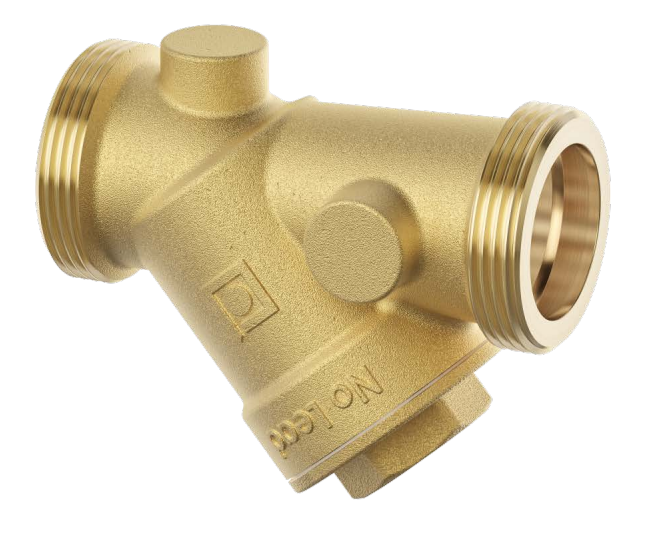

Availability: valves in lead-free brass and stainless steel from SferaTec
Deadlines can only be met if the right materials are available in time. A large part of our range is already available in CW511L-DW and CW724R-DW; all other positions we produce lead-free to customer specification. We check per position which version is suitable for your article.
Materials and dimensions
- Valves and fittings in CW511L-DW and CW724R-DW, lead content max. 0.1 %
- Stainless steel versions in V2A and V4A
- Further positive list materials on a project basis, for example CW510L-DW or lead-free gunmetal CC470K
- Standard sizes from G 1/4 to G 2½, smaller and larger nominal sizes on a project basis and with minimum quantity
Evidence for every position
- Material certificate with the corresponding positive list entry
- Batch-specific material analysis stating the lead content
- RoHS declaration of conformity without relying on exemption 6(c), provided the material’s lead content does not exceed 0.1%
Coating as an option
For additional corrosion protection we offer a high-performance electroplated coating. It is free of chromium, lead, cobalt and cyanides, assessed by the German Environment Agency (UBA) and held in the 4MS list as well as in the first version of the European positive list. The coating complements the base material; it does not replace it. For drinking water applications a coated part must also be made of a positive list material.
Info Sheets to download
Frequently asked questions about RoHS, drinking water and materials
What is lead-free brass?
Lead-free brass is a copper-zinc alloy with lead at max. 0.1 % by weight. It meets the RoHS limit without exemption 6(c) and triggers no REACH information duty under Art. 33. Common grades are CW511L-DW (CuZn38As) lead-free with Pb max. 0.1 %, CW510L-DW (CuZn42) with Pb max. 0.1 % and the silicon brass CW724R-DW (CuZn21Si3P). The material standards permit higher contents, so what counts is the delivered composition per batch. Low-lead brass contains up to 0.2 % lead and is admissible under RoHS only via exemption 6(c).
Why is lead in brass and gunmetal an issue at all?
The RoHS Directive limits lead to 0.1 % by weight per homogeneous material. Free-cutting brass and many gunmetal grades are well above that and are currently admissible only through exemption 6(c) in Annex III, which allows up to 4 % lead in copper alloys.
What is the current status of exemption 6(c)?
Delegated Directive (EU) 2025/2364 of 08.09.2025, Official Journal of 21.11.2025, set the expiry date uniformly at 30.06.2027 for all equipment categories. A further renewal application was filed on time in December 2025, and the exemption stays valid until the Commission decides. If the application is refused, the exemption expires under Art. 5(6) no earlier than 12 and no later than 18 months after the decision.
What changed on 01.07.2026?
A footnote to 6(c) has applied since then. It covers equipment supplied to the general public whose accessible parts can be put in the mouth by children. For that equipment, 6(c) additionally requires evidence of a lead release of no more than 0.05 micrograms per square centimetre and hour and, for coated parts, effectiveness for at least two years. For all other equipment 6(c) continues to apply unchanged.
Is gunmetal still an option?
Yes, but the choice is small and costly. CC499K carries only time-limited national entries and is not in Annex II of Decision (EU) 2024/367. CC470K (CuSn4Zn2PS-C) is in Annex II under entry 1657 and listed in Germany without an expiry date. Anyone planning beyond 2028 should specify CC470K to DIN SPEC 2701 with lead at max. 0.10 % and price in the high copper content.
Does RoHS apply to my component or to my equipment?
The equipment is what counts. Purely hydraulic manifolds and pipework components do not fall under RoHS in their own right. Once an actuator, pump, controller or heat exchanger is added, RoHS normally applies through the equipment: heat pumps usually category 1, transfer, domestic, fresh water, apartment and buffer charging stations usually category 11. Exceptions under Art. 2(4), for example large-scale fixed installations, need to be checked.
What changes on 31.12.2026 for drinking water?
The European positive lists under Implementing Decision (EU) 2024/367 replace the national assessment schemes, together with the conformity assessment under Delegated Regulation (EU) 2024/370 and the marking under Delegated Regulation (EU) 2024/371. From 01.01.2027 new products go through the EU route, and several countries issue no national certificate for new products from that date.
What happens to products already certified nationally?
Products holding a valid national conformity confirmation on 31.12.2026, for example ACS, Kiwa ATA, PZH, ÖVGW or a certificate based on the German UBA assessment basis, may continue to be used within the transitional period, at the latest until 31.12.2032. From then on the EU framework applies alone. In Germany, materials with increased lead release lose this option already on 11.01.2028.
Is the material name sufficient as evidence?
No. A single standard permits a range of compositions. For CW511L-DW the standard allows up to 0.2 % lead, whereas the German entry without an expiry date (2.5.3.2) requires lead at max. 0.10 %, arsenic between 0.02 and 0.10 % and nickel at max. 0.10 %. Ask for the analysis per batch, not just the designation.
Which materials are compliant without recourse to the exemption?
All materials with lead at max. 0.1 %, referred to on this page as lead-free: CW511L-DW lead-free (Pb max. 0.1 %), CW510L-DW at Pb max. 0.1 %, CW724R-DW, gunmetal CC470K to DIN SPEC 2701 and stainless steel V2A and V4A. The standard grades of CW511L-DW and CW510L-DW contain up to 0.2 % lead, count as low-lead and still need exemption 6(c) for RoHS.
Why do so many buyers choose CW510L-DW?
Because it was listed early for drinking water and is already in Annex II of the European positive list. For drinking water that is fine; for RoHS only at max. 0.10 % lead in the delivery specification, as the standard range allows up to 0.2 %. CuZn42 is also not dezincification resistant. For critical water qualities CW511L-DW lead-free is the safer choice.
Is CW511L-DW Pb max. 0.1 % already in the European positive list?
Not yet. Since March 2025 the material has been listed without an expiry date in the German UBA assessment basis (entry 2.5.3.2) and in the 4MS list. Under Art. 3 of Implementing Decision (EU) 2024/367 it may be used until 31.12.2032, because the national approval falls within the transitional window. Inclusion in Annex II via the ECHA procedure is expected.
We build in Switzerland. Does any of this concern us?
Switzerland is bound neither by RoHS nor by the EU Drinking Water Directive; the national drinking water route runs through SVGW certification under Swiss food law. As soon as a product is placed on the EU market, however, the EU rules apply in full, regardless of where it was built. Manufacturers supplying into the EU face the same deadlines as their competitors inside the Union.
What needs attention technically during the changeover?
Lead-free and low-lead alloys machine and form differently from free-cutting brass. Thread geometry, tightness, solderability and fatigue strength all need checking. Sample while there is still time for a proper approval run.
Questions about the changeover
Send us your part list. We check position by position which material is compliant today, what is available lead-free and where a changeover makes sense. You receive a reply with material proposal, evidence and supply situation.
SferaTec Gebäudetechnik GmbH, Cliev 16, 51515 Kürten, T +49 2207 84 64 491, kluth@sferatec.de
Sources and legal basis
All statements on this page checked against the primary sources, last reviewed 06.10.2026.
EU law
- Directive 2011/65/EU (RoHS) Annex II limit values, Annex III exemption 6(c), Art. 5(5) and 5(6)
- Delegated Directive (EU) 2025/2364 of 08.09.2025, Official Journal 21.11.2025, expiry date of 6(c) uniformly 30.06.2027
- Directive (EU) 2020/2184 Drinking Water Directive
- Implementing Decision (EU) 2024/367 European positive lists, Art. 3 transition
- Delegated Regulation (EU) 2024/370 Conformity assessment
- Delegated Regulation (EU) 2024/371 Marking
- Regulation (EC) 1907/2006 (REACH) Art. 33 information duty
Germany and 4MS
- UBA metal assessment basis (Germany) Consolidated version with 8th amendment of 09.07.2026
- Fifth amendment of the UBA metal assessment basis of 05.03.2025, CW511L-DW with Pb max. 0.1 % added as entry 2.5.3.2 "niedrig Blei", BAnz AT 14.03.2025 B4
- 4MS Common Approach, Part B Positive list of compositions, revision 24 of 10.08.2026 (PDF)
- German Drinking Water Ordinance (TrinkwV 2023) Section 17(3), lead limit from 12.01.2028
- ElektroStoffV German transposition of the RoHS Directive
REACH and SCIP
- ECHA Candidate List Lead (CAS 7439-92-1), added on 27.06.2018
- ECHA SCIP database Notification duty since 05.01.2021
Standards
- EN IEC 63000 Technical documentation RoHS
- EN 15664-1 Test value for lead release
- DIN SPEC 2701, ISO 6509 Gunmetal CC470K, dezincification resistance
Standards are not freely available and are therefore not linked. National approval schemes in other markets (ACS, Kiwa ATA, NIZP PZH-PIB, ÖVGW, SVGW) are summarised on this page; the applicable versions of the legal acts listed prevail.